

Industrial companies are producing content faster than ever. What’s breaking down isn’t volume – it’s coherence. And the fix isn’t another AI tool.
Check out any corporate blog posting, brochure or social post, and the paradox becomes impossible to ignore. Companies possess genuinely differentiated solutions, and yet you can’t make heads or tails of their value proposition, or even the point they’re trying to convey.
In this day and age, where access to free or low-cost AI is plentiful, it isn’t necessarily a knowledge problem. It’s a content strategy problem. And it’s costing industrial manufacturers deals their products should be winning.
The conventional diagnosis is always the same: content is king. Write more blogs, produce more videos, interview customers for more case studies, post more on social. And while the advice isn’t technically wrong, it misses the more consequential issue: content volume has become a distraction from content quality and alignment. If you’re a CMO, Head of Marketing, CRO or Sales Vice President, you may be sitting on more assets than ever before. But are you threading a coherent and effective story through them all?
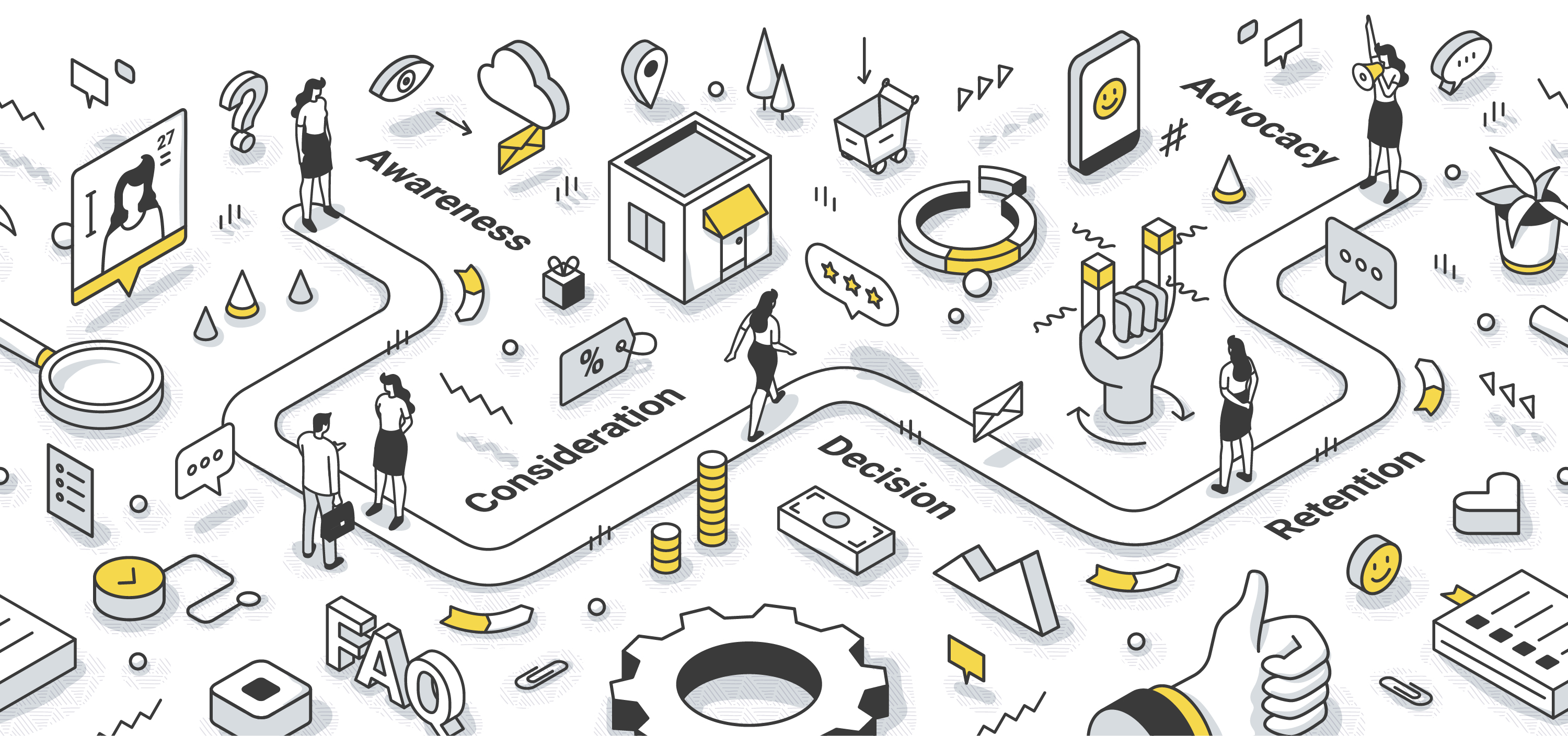
The Misalignment Tax
Sales and marketing misalignment isn’t a “nice to have” problem, nor is it an anomaly. Forrester Research found that 65% of sales and marketing professionals believe that there is a lack of alignment between the two functions. And there’s a cost to it.
There’s certainly the loss of opportunities, acknowledges sales enablement platform provider Seismic, but there’s also content waste, in which marketing teams are churning out assets that sales and marketing teams either aren’t aware of, don’t know how to effectively apply them or outright dismiss. Without the proper content to assist sales, naturally there’s slower cycles, too. Trust between marketing and sales wanes, and internal burnout escalates as marketing feels underutilized and sales feels under supported. Even more so, the customer experience suffers as inconsistent, unclear or missing messaging leaves prospects and clients confused and potentially doubtful about your company’s ability to make good on its promises.
The manufacturing sector carries a disproportionate share of this burden.

According to the Content Marketing Institute’s 2025 research on manufacturing marketers, 47% admit difficulties with aligning content efforts across sales and marketing, and nearly half say they’re challenged in aligning content with the buyer’s journey at all.
More and more B2B buyers are preferring a “rep-free buying experience,” so when buyers encounter inconsistencies between a vendor’s website and what their sales reps say, it becomes a breeding ground for Fear, Uncertainty and Doubt (FUD). For industrial sales environments, where enterprise deals involve multiple stakeholders, long approval cycles and a buyer base that has been burned by hype before, FUD doesn’t just slow deals down. The problem is that it ends them.
AI Is Making the Problem Faster, Not Smaller
The emergence of AI-powered content tools has injected new urgency into the alignment problem. Manufacturing marketers can now produce content at a speed that would have been unimaginable three years ago, complete with vertical adaptations, channel reformats, campaign variations – all generated in hours rather than weeks.
But speed without strategic direction simply accelerates inconsistency. “Tool sprawl, shadow usage, rogue applications and inconsistent skills flourish in an unregulated [AI] environment,” reports CEO advisory firm Vistage. The same issues apply to an AI-first content function that lacks the strategic architecture to determine what to say, to whom, in what sequence and why.
Why Industrial Buyers Require a Different Kind of Proof
Enterprise buyers in manufacturing and logistics are not early adopters by temperament or by organizational design. Plant managers and VPs of Operations have long institutional memories of projects that overran budgets, disrupted production or simply didn’t deliver.
Building a content system that moves cautious, multi-stakeholder buyers needs to involve specific, documented and referenceable proof. And that requires senior judgment about what buyers actually need to hear at each stage, one that is best suited for a fractional marketing leader with a specialization in content strategy, like Towers Fractional Marketing.
The most effective fractional content strategy engagements function less like campaign management and more like systems architecture. A senior practitioner comes in, works with corporate vision and strategy and understands the competitive landscape to establish the messaging framework, which includes the single-owned value proposition, the persona-specific tracks, the brand voice, the differentiation hierarchy and then builds the operational infrastructure that allows a junior team to execute against it reliably.

Junior marketers don’t get better by being given more work or more tools. They get better by being given clearer direction, structure and automation to support the more basic or repetitive tasks, like meta data and keyword generation based on content. Subject matter experts contribute more effectively when they know what story they’re contributing to. Agency partners become extensions of the internal team rather than independent content producers working from a brief that nobody fully trusts. And sales becomes empowered to leverage assets for their intended purpose, customize with minimal drift and follow a path to request new content with nominal lift on their part.
The engagement ends. The system doesn’t. That’s the distinction with a strategic fractional marketing engagement – and it’s precisely what industrial companies chasing revenue in a guarded market need most right now.
If you’re ready to turn your proven solutions into a story that closes deals, book your call with Towers Fractional Marketing today.
Susan Towers is principal of Towers Fractional Marketing, a strategic marketing leadership firm specializing in SMB industrial manufacturers, SaaS and IT Professional Services companies looking to solve their big challenges to grow revenues and increase customer retention. Contact her at stowers@towersfractionalmktg.com or via LinkedIn to learn more.
